Training needs analysis worksheet
Check if training is the right fix, from business goal to solution.
Download PDFLearning Experience Designer, L&D Program Manager and psychology graduate
I design and run learning programs for organisations. I start by finding out what is actually holding people back at work, then build training that changes how they work.
Is training really the answer?Diagnose your team in 60 seconds
A 60-second TNA. Answer four questions and I’ll show you where I would start, even if the answer is not training.
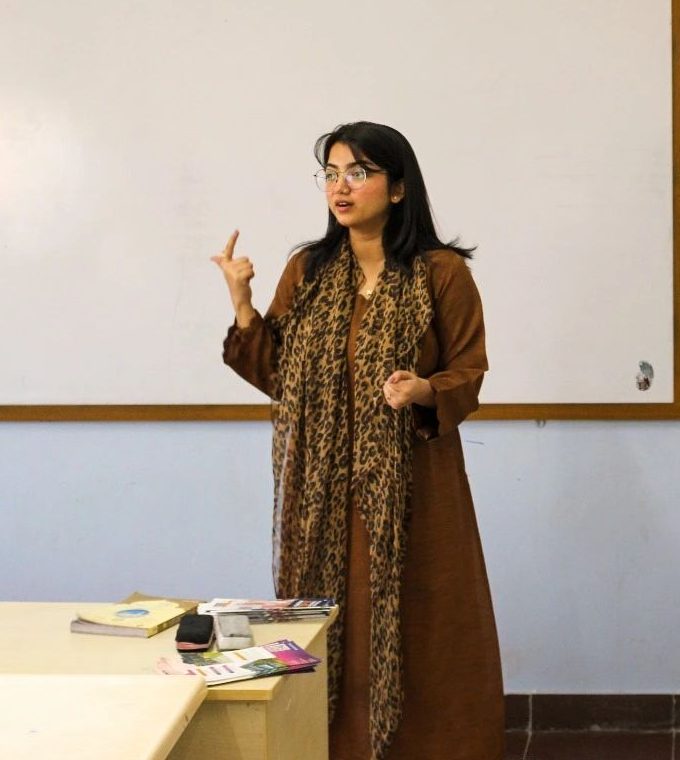
I’m a Senior Program Manager at PSTD in Karachi, with 3+ years in learning and development.
I manage learning programs from start to finish. I find out what the real need is, design the program, run it across cities and measure what changed. My degree in psychology helps me design for how people actually think and behave at work.
Needs analysis, role-based diagnostics, focus groups and pulse surveys
Learning journeys, assessments, train-the-trainer models and bilingual e-learning
Multi-city delivery, Kirkpatrick evaluation and personal development plans
These are the five steps I follow in every learning program, but they are out of order. Tap two cards to swap them, then check your answer.
Before I plan any training, I ask one question: what is stopping people from doing their best work? Every program I run follows these five steps.
Interviews, surveys, focus groups and on-floor observation
Roles mapped to capabilities, success agreed upfront with leaders
Blended journeys built for the audience: classroom, coaching and digital
Multi-city logistics, trainer briefing, scheduling and attendance
Pre and post tests, supervisor input and development plans
Examples of the reports I put together for clients. All names and numbers here are illustrative.
Needs analysis snapshot
Operations team, 120 staff
Where people struggle most
Share of staff who rated themselves low
Based on
Recommendation
Focus the program on prioritisation and handovers. System training is not the main gap, so it becomes a short refresher, not a full module.
Program impact report
Team leaders, 3 months after training
Level 1
Did they like it?
0 / 5
average session rating
Level 2
Did they learn?
0% to 0%
average test score, before and after
Level 3
Do they work differently?
0%
of managers see a change on the job
Level 4
Did the business improve?
0% fewer
rework requests between teams
Participant action plan
Participant A, Module 2: Communication
My goal
Make my handovers to the next desk complete the first time, so nothing comes back for rework.
My steps (tick them off)
Progress
Check-in with manager
Week 3, during the floor day. We review what changed and agree the next step.
Client names are kept confidential. Open any case to see the problem, what I designed and the results.
360 employees assessed, 100% participation
A commercial banking unit of 360 employees across different roles, levels of authority, tenure and technical exposure.
One standard curriculum would have treated everyone as the same starting point. The business needed to see which gaps were real, and for whom.
Program Manager and designer: SME and stakeholder consultation, the role-to-knowledge framework, deployment support and the training rollout.
Everyone took one common section, plus only the sections their role needed. This kept the test short and made results easy to compare across teams.
Click a role group to see what learning it got.
What we learned: seniority did not reliably predict knowledge, so only evidence-based learning was assigned. The work was recognised with a Certificate of Appreciation.
6,000+ employees reached
A financial institution with 6,000+ employees across many locations, launching its first DEI program.
Leaders needed space to reflect, the wider workforce needed accessible learning, and external consultants alone could not reach every location.
Program Manager and designer: pulse survey, stakeholder alignment, learning strategy, course QA and LMS rollout.
Leaders went first, and reflection replaced grading. People rarely speak honestly about bias when they are being scored.
73% of supervisors saw the change
A trade operations team at a bank, working against regulatory deadlines and cross-team dependencies.
Reactive responses under pressure, unclear communication and fragmented coordination between desks.
Program Manager and designer: discovery, journey design, assessments, evaluation and development planning.
Each module ended with mentoring on the work floor, so people could practise the new behaviour in their real job.
Evidence came from pre and post assessments, participant feedback, 51 floor mentoring sessions, a supervisor survey and 70-20-10 development plans.
~90 participants, Sep 2026 to Mar 2027
Operations teams of a bank across three cities, in a six-month development programme.
Five focus areas. Each month pairs a training day with floor days for action-plan reviews and one-on-one mentoring.
Program Manager and designer: delivery model, baseline survey, action-plan journal and client reporting.
Each participant commits to one real workplace problem per module, then checks back on it at the next session.
Recreated sample page from the participant journal. No participant data shown.
Module 2 of 5
Why this one: only 68% agree that work arriving from another desk is complete and clear.
Checking back on Module 1: Yes, fully / Partly / Not yet
The same simple tools I use in my own work. Free to download and use with your team.
Check if training is the right fix, from business goal to solution.
Download PDFMap what a role needs to know, do and handle, and find the gaps.
Download PDFTurn a training session into one real change at work.
Download PDFGive a new joiner a clear first three months.
Download PDFAt PSTD, I look after a portfolio of corporate clients, from the first proposal to delivery. My results for FY 2025-26:
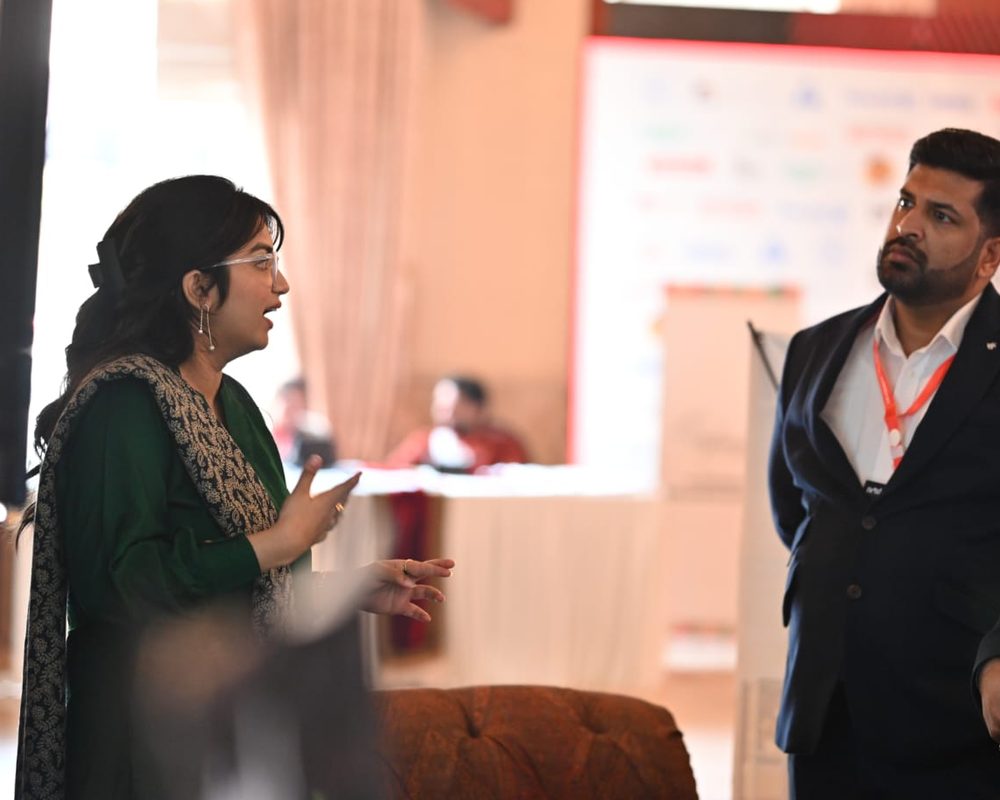
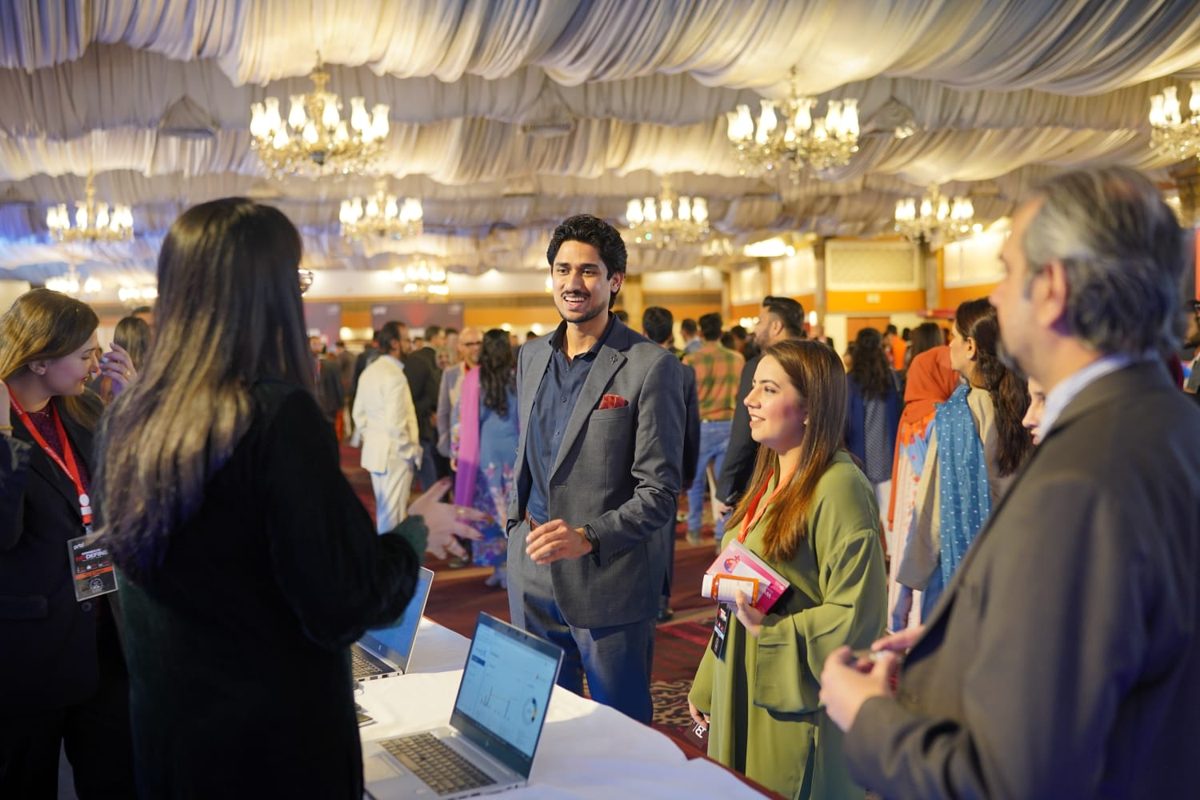
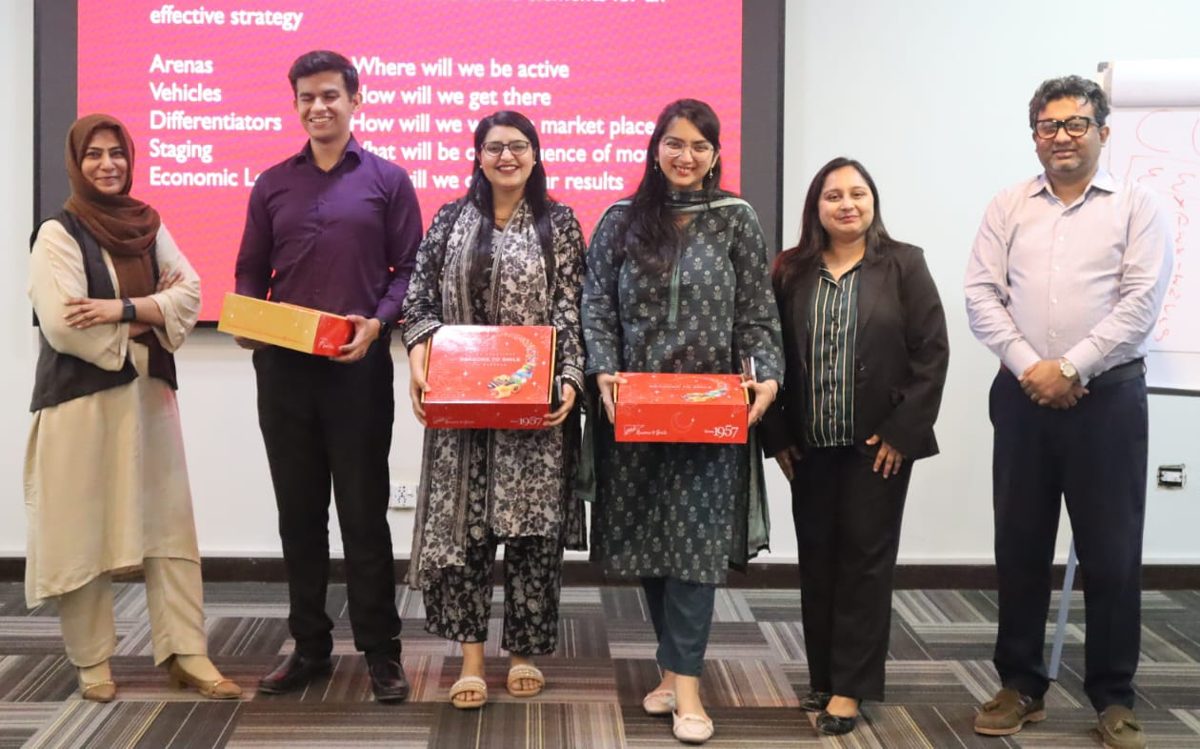
What managers, clients and university faculty have written about me, taken word for word from reference letters and LinkedIn recommendations. Names are withheld.
“What makes Fatima stand out is her growth mindset.”
“What makes Fatima stand out is her growth mindset. She is motivated and passionate, and approaches every task with an eagerness to learn. She is open to feedback and uses it to improve her skills and performance. […] As an intern, she helped launch the DEI program. Later, as Program Manager, she was assigned the DEI training portfolio, along with soft skills, OD, and commercial banking, which has impacted more than 6,000 employees. Throughout all these initiatives, Fatima demonstrated excellent leadership and organizational skills.”
“Fatima has been an asset to our organization.”
“Fatima has been an asset to our organization and has demonstrated resilience and adaptability in her role. During her first week, she worked on our biggest client, […] taking over their portfolio from planning to logistics. She dealt with the complexity with utmost professionalism and even earned appreciation from an external facilitator for her coordination. She has since proceeded to continue to implement multi-stakeholder learning programs, supported student development efforts and worked with partners in a professional and transparent manner.”
“Her strategic approach to program management […] [was] invaluable.”
“During her tenure, Fatima consistently demonstrated dedication, professionalism, and expertise. Her strategic approach to program management and deep understanding of HR and learning and development were invaluable. […] She excelled in communication, motivation, and project execution, fostering a positive work environment where teamwork thrived.”
“She is very prompt, detail oriented and professional.”
“What a wonderful talent! I had the pleasure to collaborate with Fatima on few training projects recently. She is very prompt, detail oriented and professional. She will take her organization to the next level!”
“As a team player, Fatima excelled in keeping everyone united and focused.”
“[Her] exceptional dedication, optimism, and strong-headedness have made a profound impact on our team. […] As a team player, Fatima excelled in keeping everyone united and focused. Her natural leadership and ability to foster a collaborative environment were instrumental in achieving our objectives.”
“Fatima was always at the top of her class.”
“Fatima was always at the top of her class and graduated Magna Cum Laude with a 3.89 CGPA. […] She showed initiative in asking for feedback and showed persistence in narrowing down her research questions. She demonstrated intellectual autonomy in finding relevant sources and methods.”
“Fatima showed empathy, maturity and people skills very early on.”
“In counselling, Fatima showed empathy, maturity and people skills very early on. […] She stood out in professionalism, discipline and ability to learn from experience, which she always connected to her studies. […] She showed a good grasp of research design, data analysis and critical thinking.”
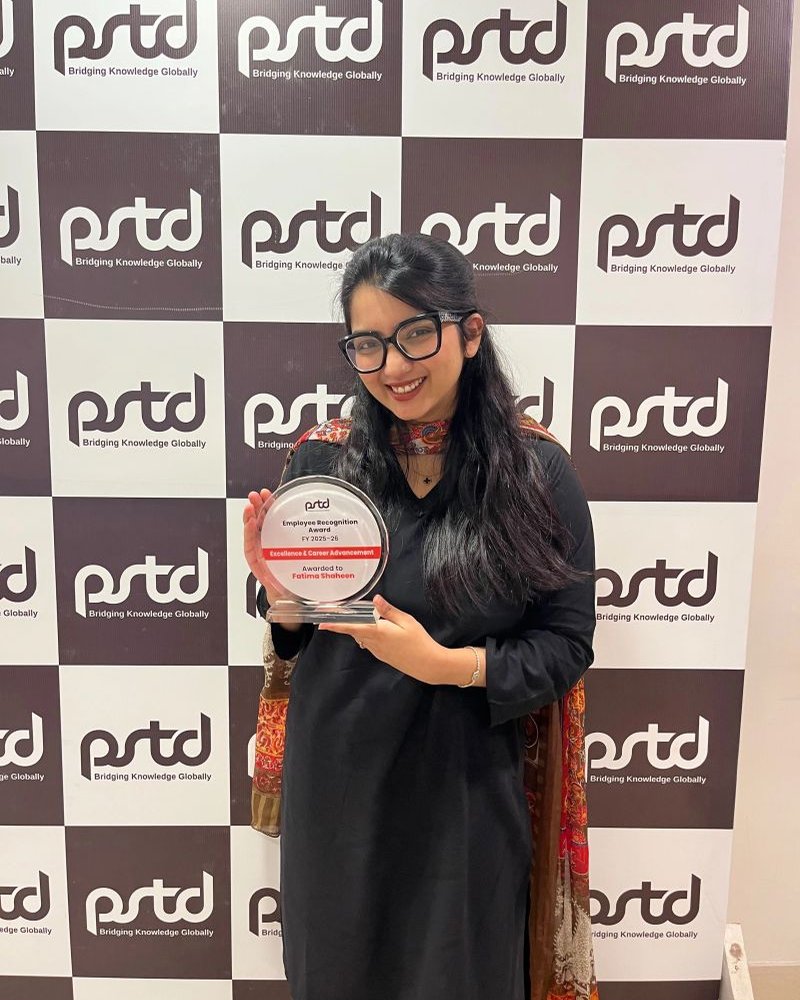
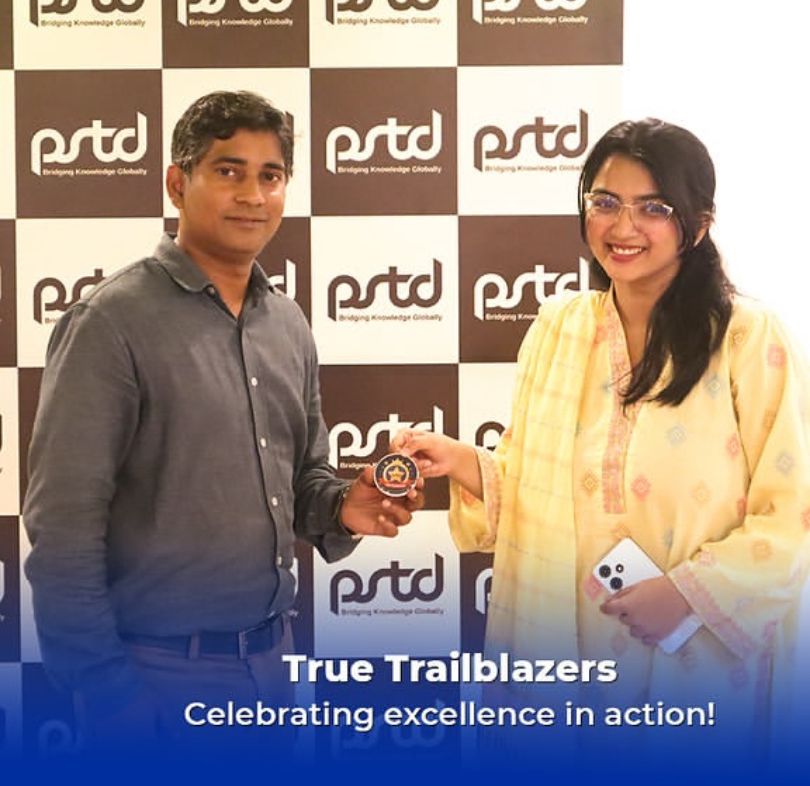
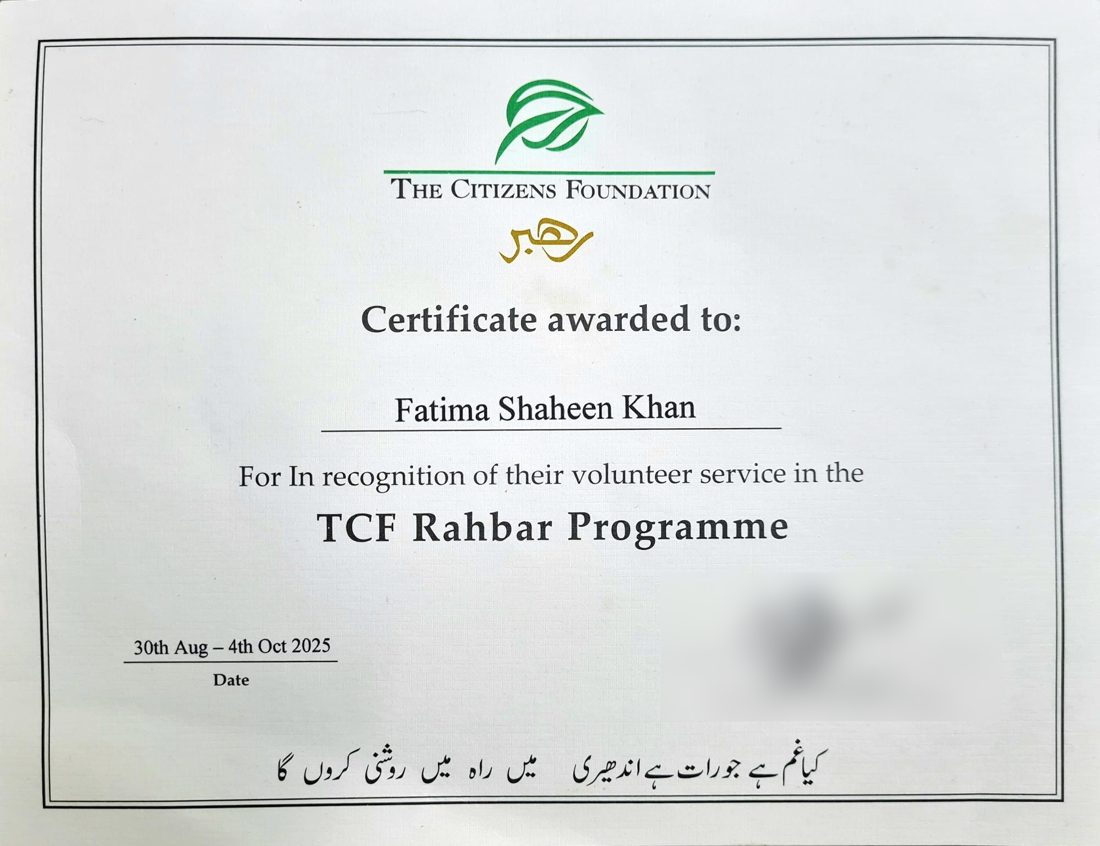

A note from my mentoring coordinator: “Depth, thoughtfulness, and heart. Never lose that.”
Based in Karachi, Pakistan. Open to remote and international collaboration.